Discover Service and Connection: Introducing the Get Involved App

In a world pulling us in countless directions, true fulfillment comes from serving others as the Savior taught. The Church of Jesus Christ of Latter-day Saints has launched Get Involved, a powerful new app designed to help members live the two great commandments—loving God and loving our neighbors—through practical, inspired service opportunities.

What Is Get Involved?

Released in 2024 and continually updated, Get Involved is the official mobile app for JustServe.org, the Church’s global platform for community volunteerism. As President Russell M. Nelson has emphasized, “The best is yet to come… as we focus on Jesus Christ and His gospel” (October 2024 General Conference). This app embodies that focus by connecting users with real needs in their local areas, from food drives to disaster relief.

Key features include:

  • Localized Opportunities: Search for projects by zip code, skills, or cause—whether tutoring youth, assembling hygiene kits, or supporting refugees.
  • Group Coordination: Create teams for ward activities, youth groups, or family service projects.
  • Tracking and Inspiration: Log hours, share experiences, and receive tailored recommendations based on your interests.
  • Integration with Church Tools: Seamlessly links with your Church account for streamlined sign-ups.

Available free on iOS and Android, the app reflects the prophetic priority on “ministering as the Savior did” (President Nelson, April 2018).

Rooted in Scripture and Prophetic Counsel

Service isn’t optional—it’s central to discipleship. The Book of Mormon teaches: “When ye are in the service of your fellow beings ye are only in the service of your God” (Mosiah 2:17). Modern apostles echo this: Elder Dieter F. Uchtdorf counseled, “As we emulate [Christ’s] example, we will bless lives, including our own” (October 2019).

Unlike secular volunteer apps that treat service as self-help, Get Involved aligns with covenant path principles. It strengthens families (as urged in “The Family: A Proclamation to the World”) and builds Zion communities. Contrast this with creedal Christianity’s emphasis on individual salvation through faith alone (sola fide in Protestantism) or sacramental grace (Catholic tradition)—Latter-day Saint doctrine integrates works as evidence of living faith (James 2:17-18; 2 Nephi 25:23).

Why It Matters Now

In an era of digital isolation, Get Involved counters with real-world impact. Data from JustServe shows millions of volunteer hours logged annually, proving that small acts create ripple effects. Biologically, service triggers oxytocin release, fostering bonds and reducing stress—evidence of divine design in human physiology, where altruism enhances survival and societal cohesion (contrasting evolutionary views of selfishness as a primary driver).

Get Started Today

Download Get Involved from the App Store or Google Play. Sign in with your Church account, set your location, and browse opportunities. As King Benjamin declared, retaining a remission of sins comes “by succoring those who stand in need” (Mosiah 4:26).

This app isn’t just technology—it’s a tool for becoming more like Christ. Start serving, and watch blessings unfold.

Don’t Cheat Those Who Love You

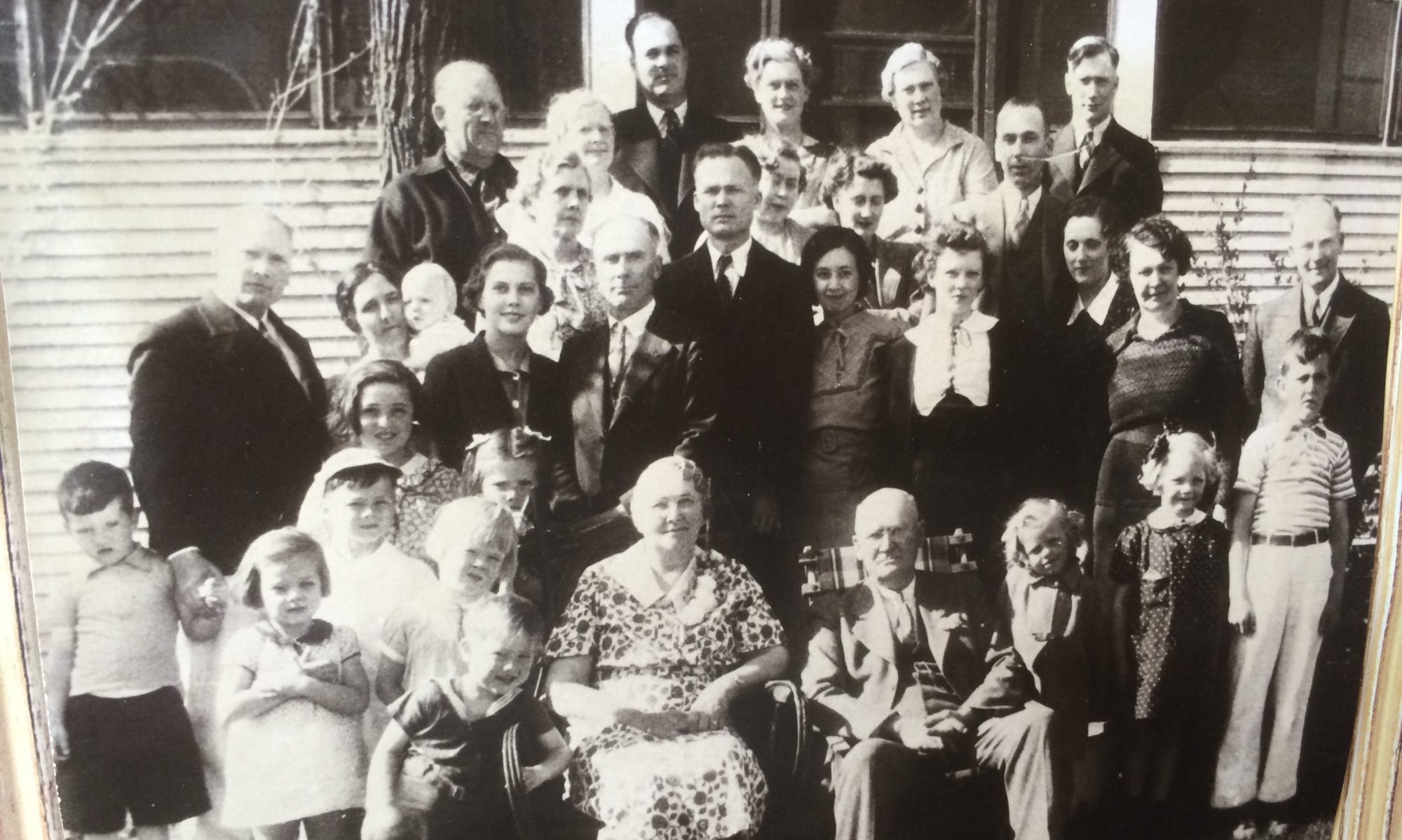
Don’t cheat those who love you by neglecting to recall for them your life experiences, what you learned, and how you felt, including your love for family members. If you do not, your tombstone may have your name and dates on it, yet, the person buried will be no different then the Unknown Soldier, but you will be the ‘The Unknown’ Grandfather/Grandmother.’ Without your story left behind, within three generations you are not only dead/buried but you are forgotten and ‘unknown’ as well. You may have a hard time writing and putting words together in meaningful ways—that should not excuse you. In today’s world, a person can dictate to another or even a machine to preserve various stories, thoughts and feelings about their life and times. Do not cheat your posterity, those that care about you and love you.

– Emil O. Hanson (Director Ogden LDS FamilySearch Library, 2000-2015)

Preserve Their Stories

If you don’t preserve the stories of your life and the lives of other family members, the only things left to document their lives will be a few documents and photographs and the questionable memories of others. By recording your history, you get to decide what you will be remembered for and what stories will be preserved that best tell the story of your life. Your descendants cannot appreciate the life you lived if they don’t know you.

– Stephen F. Anderson

Forgotten in Three Generations, Unless…

Why is it important to write your history, or rather your story? Let me try to explain why. A few years ago I was asked to speak about family history to a group of boys. These are 14 and 15 year-olds for the most part and they had very little or no interest in family history. Before I was introduced, I had no clue as to what I would say to them. As I was introduced there was an obvious but unspoken, “Oh no!” that was displayed by their expressions. Following the introduction, out of my mouth but not connected to my brain came the words:

“Do you love your fathers and mothers?’ They all voiced a positive to that.
“Why do you love them?’ I asked. There were many reasons voiced.
I then asked them if they thought that their father and mother loved their father and mother? The answer was yes and for the same reasons. Then I asked them if they thought that same family love extended to each generation that came before them. They said, “probably”.

Then I asked them if they knew their grandfather’s first name. Most of the boys knew their grandfather’s first name, but a few knew them only as grandfather or grandpa. (None of the boys knew anything about their great-grandparents or had even considered their parents’ grandparents.) Those great-grandparents represent their third generation back and they were already forgotten by this generation of boys; already forgotten or had never been known by this generation of youth.

– Emil O. Hanson

Do You Know? A Measure of Social Well-Being

What do you know about your family? What will be remembered? Ask your children the following questions to gauge what they know and how you will be remembered.

1. Do you know how your parents met?

2. Do you know where your mother grew up?

3. Do you know where your father grew up?

4. Do you know where some of your grandparents grew up?

5. Do you know where some of your grandparents met?

6. Do you know where your parents were married?

7. Do you know what went on when you were being born?

8. Do you know the source of your name?

9. Do you know some things about what happened when your brothers or sisters were being born?

10. Do you know which person in your family you look most like?

11. Do you know which person in the family you act most like?

12. Do you know some of the illnesses and injuries that your parents experienced when they were younger?

13. Do you know some of the lessons that your parents learned from good or bad experiences?

14. Do you know some things that happened to your mom or dad when they were in school?

15. Do you know the national background of your family (such as English, German, Russian, etc)?

16. Do you know some of the jobs that your parents had when they were young?

17. Do you know some awards that your parents received when they were young?

18. Do you know the names of the schools that your mom went to?

19. Do you know the names of the schools that your dad went to?

20. Do you know about a relative whose face “froze” in a grumpy position because he or she did not smile enough?

Source: Duke, M.P., Lazarus, A., & Fivush, R. (2008). Knowledge of family history as a clinically useful index of psychological well-being and prognosis: A brief report. Psychotherapy Theory, Research, Practice, Training, 45, 268-272.

Connection through Experience

“Bio” means “life” and “epic” means “an extended story or narrative, surpassing the usual or ordinary, particularly in scope or size.” In short Bioepic® preserves the life-stories of humanity, one human at a time. The project has many parts: geneology, personal history, and storytelling. The last aimed at preserving the human experience from those who’ve lived through difficult, amazing, and wonderful times, on both a personal and global level. The focus is on sharing beneficial stories, strengthening interpersonal relationships, and learning from the failures and successes we’ve each experienced.